Readypower Group's
Approach to Sustainability
Foreword by the Chief Executive Officer
At Readypower Group, our purpose is to keep critical infrastructure moving safely, efficiently and sustainably. With four operating companies operating throughout the UK and Canada, we specialise in road rail plant, contactless excavation, drainage clearance and civil engineering. The sectors we serve play a critical role in the transition to a more sustainable future.
As a leader in the industry, we recognise our responsibility to reduce the impact of our operations on the environment and society.
I’m proud to have a fantastic team throughout the Readypower Group. Every member of the team is valued and has an opportunity to make a positive impact within their role. We provide a safe environment to work, offer both personal and professional development opportunities and empower our team to speak freely and provide input to ensure we’re continuously improving.
In 2025, based on our 2024 sustainability performance, I was pleased to see our team’s 5-star achievement on the GRESB global sustainability benchmark. This year I have set the target to maintain our 5-star achievement. We utilise our participation in GRESB as a way of measuring our sustainability progress and to create a structured action plan to help us reach our goal of Net Zero by 2050.
Only by absolute commitment and being fully transparent, can our customers, society, passengers and employees see what we’re doing to achieve Net Zero by 2050.

About Us
We have decades of experience and understand the UK regulated railway infrastructure and know how to be a leading asset led hire business.
We’re the largest provider of road rail vehicles (RRVs) in the UK, providing specialist services in plant operating scheme (POS) requirements, contactless excavation, drainage clearance and civil engineering.
We operate from several hubs across the UK (Reading, Nottingham, Warrington, Blantyre, Stafford, March, and Caldicot), aligning with the Network Rail regions.
Vision, Strategies and Sustainability Goals
Our vision is to be UK & Canada’s leading specialist asset-led infrastructure
service provider to rail and other regulated infrastructures.

The heart of our business
- Employee well-being, health & safety at our core
- ‘Employer of choice’ underpinned by equality, equity, inclusion and diversity
- Environmentally sustainable
- Protect our core position
– Aspire to be the supplier of choice - Grow addressable market
– diversify offering into other regulated infrastructures
– make tactical acquisitions - Have specialist asset-heavy RTL products and services
- Leverage drainage and suction / contactless excavation services across the Group
- Have surety and visibility of sustainable revenue and profit
- Harness analytical data
- Drive continuous improvement and innovation
- Process driven

Environment / Sustainability
We are highly focused on maintaining and improving our environmental management. We strive to carry out our undertakings with minimal environmental impact. Our aspiration is to achieve Net Zero by 2050.
With the newest plant fleet in the UK, we continue to invest in assets with cleaner and more efficient engines. We’ve already made a significant impact by replacing diesel powered company vehicles with hybrid or fully electric vehicles as they come to the end of their life.
We’ve maintained the highest award as ‘Gold’ members in the Supply Chain Sustainability School. This encourages us to continue educating ourselves and our staff in current environmental topics whilst improving our sustainability.
During 2025 we installed solar PV technology at our new Blantyre site, in line with our ESOS Plan commitments to the Environment Agency. Further installations will progress through 2026/27.
To help us on our Net Zero journey, we provide staff training on subjects like efficient driving of plant and vehicles, energy conservation, and recycling at our offices.
Our Commitment as a Sustainable Business
Readypower Group recognise that sustainability and strong financial performance go hand in hand. By improving our efficiency, reducing generated waste, optimising our resources and investing in new technologies, Readypower not only reduces our operational impact on the environment and society we operate in, but we also strengthen the resilience and profitability of our business.
Our aim is to maximise value for our customers. By embedding sustainability into our strategy and day to day decision making, we generate lasting value for all key stakeholders, ensuring positive environmental and social impacts alongside Readypower Group remaining an agile and financially sustainable business.
To keep our objectives dynamic, we encourage and empower our staff to seek improvements in their day-to-day work. Our staff and relevant interested parties help us make informed decisions that keep people safe, minimise impacts on the environment, ensure we add value to society and maintain our excellent customer service.
We have and will continue to invest in innovative plant to help maximise production for our customers, whilst also reducing emissions, which aid in reaching our Net Zero target by 2050.
We will give consideration when procuring services and materials from our approved suppliers. And we shall take best actions for us when disposing of our waste, promoting reuse, recycling, and waste minimisation.
Each of our board directors has a personal aspiration to ensure our activities respect the natural resources of our planet. They see sustainability as a core value, ensuring the wise use of resources in which economic, environmental and social factors are balanced and implemented.
Our leadership teams are fully committed to the prevention of pollution and minimising the impact that has been seen on the planet’s resources, not just for today, but for future generations.
Launched in 2012, the Supply Chain Sustainability School is a virtual learning platform around sustainability, with the aim to upskill those working within, or aspiring to work within, the built environment sector.
The learning topics cover the three core pillars of Sustainability – Environmental, Social and Economic – looking at key issues ranging from carbon management through to combatting modern slavery.
Throughout this year, Readypower has maintained gold status on the learning portal thanks to continuous engagement from the Readypower employees.
The portal offers a company assessment, track the score, and can generate a bespoke learning plan for all the members of the team. In 2025, Readypower Group retained its gold status, the highest possible status.
We’ve set targets for our team to achieve a set number of learning hours to retain our gold status each year.
Our Approach to Sustainability
We believe commitment to managing sustainability represents value and creates balance between financial objectives and social responsibility.
We will:
- Ensure our vision and objectives are relevant, understood and communicated with our stakeholders
- Work with our customers, suppliers and business partners to encourage them to adopt a similar principal to us
- Identify risks and implement adequate control measures and provide resource to mitigate those risks
- Aim for high performance targets, record achievements and submit the evidence to GRESB and AA1000AS for assurance
- Continue to challenge ourselves with SMART objectives that can be tracked and made fully transparent
- Consider sustainability and the environmental risks / impacts when making important business decisions
- Adopt a high standard of corporate governance and ethics
- Continue to improve our management systems and provide adequate resource to maintain compliance with regulatory and policy requirements
- Continue to educate and inform our staff on sustainability related topics
- Take guidance from the 17 Sustainability Development Goals (SDGs) created by the United Nations as a framework to identify ESG risks and opportunities that contribute to sustainable development
Our Sustainability Framework
The Sustainability Development Goals (SDGs) describe the Environmental, Social and Governance (ESG) challenges that organisations face across the globe, including climate change, inequality, resource usage, business ethics.
Work and co-operation of governments and the United Nations (UN) along with businesses and members of the public is needed to meet the 2030 commitment.
There are 17 specific goals that breakdown into 169 targets. The 10 goals that are most relevant in the context of Readypower’s operations are shown including specific target areas.

- Employee health, safety and wellbeing
- Health and safety risk assessment
- Air Quality
- Fair and local job creation
- Strengthen capacity through supplier engagement
- Increased productivity through diversification & Innovation
- Reduce adverse impacts on cities – air quality
- Inclusive and sustainable industrialization
- Reliable and resilient infrastructure

- Target net zero carbon emissions
- Proactively manage GHG reduction
- Proactively manage climate impacts on assets

- Zero tolerance to bribery
- Zero tolerance to modern slavery
- Comprehensive codes of conduct

- Diversity and Inclusion Policy
- Monitoring for gender pay gap
- Flexible working
- Reliable and resilient infrastructure
- Scientific research and upgrade technologies
- Procurement to encourage innovation

- Sustainable and responsible resource plan
- Zero waste to landfill
- Scientific and technological capacity
- Reduce terrestrial pollution
- Reduce deforestation
- Prevent loss of biodiversity

- Customer and supplier engagement
- Employee engagement
- Local community
Sustainability Benchmarking
Critical infrastructure industries play a critical role in enabling the UK’s transition to a lower-carbon transportation networks. Delivering this requires infrastructure partners that can demonstrate credible environmental and governance performance, alongside operational excellence.
GRESB provides a common benchmark for sustainability performance across the infrastructure sector. For asset owners, operators and investors, a GRESB star rating demonstrates environmental and ethical standards are being effectively managed.
Through its globally recognised assessments, GRESB delivers standardised, validated, sustainability data, peer benchmarking, and actionable insights across infrastructure and real estate portfolios and assets worldwide. The GRESB framework enables organizations to enhance performance, improve transparency, and align sustainability strategies with evolving investor and stakeholder expectations.
The GRESB assessment is split into two parts:
- Performance metrics – energy use, greenhouse gas emissions and air quality, health and safety, employee diversity, customer satisfaction, and certification.
- Management metrics – leadership, policies, reporting, risk management, climate and stakeholder engagement.
In 2025, our third submission, we were proud to have achieved a GRESB score of 5 stars, the highest possible achievement. We’ve set a 2026 target to maintain our 5 stars.

Decarbonisation Strategy
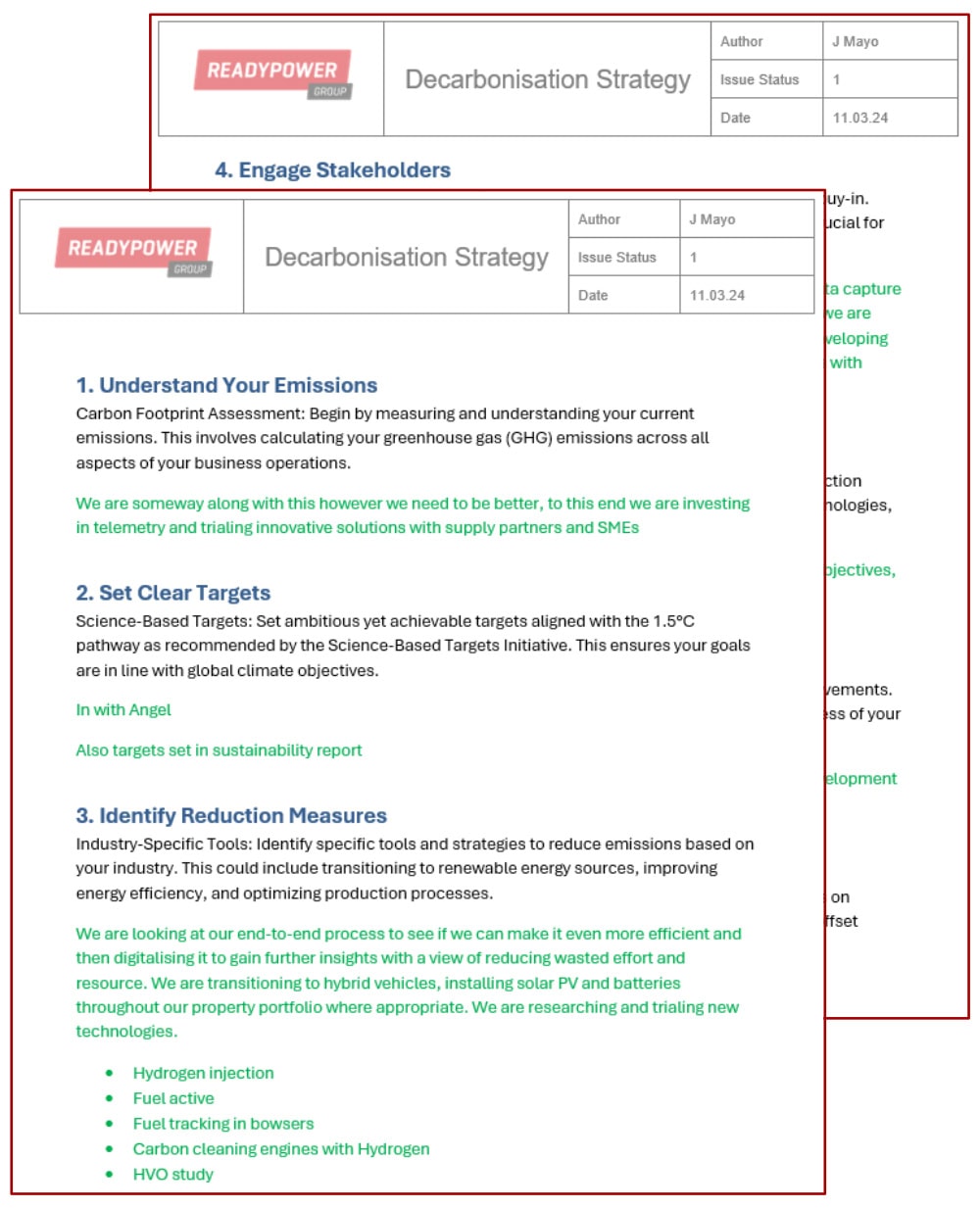
Decarbonisation is a key part of Readypower’s long-term strategy, supporting both our sustainability commitments alongside our ambition to remain a competitive and trusted partner within the critical infrastructure sector.
While progress has been made, we recognise that there is still much more to do. Our approach will be structured, data-driven and focused on delivering tangible, positive outcomes for all stakeholders involved in our operations.
Decarbonisation
Decarbonisation refers to the process of reducing carbon dioxide (CO₂e ) emissions associated with human activities, particularly those resulting from the burning of fossil fuels such as coal, oil, and natural gas. Our aim is to mitigate climate change by transitioning to a low-carbon economy.
Our key strategies and practices involved in decarbonisation include:
Transition to Renewable Energy:
- Replacing fossil fuels with renewable energy sources like solar, wind, hydro, and geothermal power for our buildings (we have implemented solar PV panels at our new site in Blantyre, and we are assessing our Nottingham and Warrington depots for future instillation).
- Implementing and considering further adoption of distributed energy resources (DERs) and energy storage systems such as battery storage in solar and wind systems, and hydrogen in plant assets.
Energy Efficiency:
- Enhancing energy efficiency in buildings (modern AC units sized to each room / zone), drop down ramps on low loaders and replacement of diesel to hybrid or full electric vehicles within our fleet.
- Implementing energy-saving technologies and practices, such as LED lighting with PIR technology, and auto closing doors.
Electrification:
- Electrifying sectors that traditionally rely on fossil fuels, such as electric / hybrid vehicles, and using AC heat pumps for heating.
- Considering energy suppliers who use clean sustainable energy sources (this is our mid to long term aspiration).
- Electrify fleet where possible with additional salary-sacrifice scheme available for our employees.
Policy and Regulation:
- Ambition to achieve Net Zero Target by 2050.
- Providing full transparency and compliance with policies, regulations and UN Goals.
Sustainable Practices:
- Supporting our stakeholder involved in sustainable land use, forestry, and agricultural practices to enhance carbon sequestration.
- Becoming industry leaders by example. Commitment to being a sustainable business helping our clients’ meet their environmental targets.
Decarbonisation Case Study
01 – Transition of Company Vehicle Fleet to Hybrid or Fully Electric Vehicles
Readypower is on a journey to decarbonise in a sustainable way.
As of 2025, Readypower operates over 180 hybrid or electric vehicles across the business. We invested in 21 fully electric company cars throughout 2025, and aim to continue significant investment in 2026, with an ambition to achieve a 95% hybrid or fully electric company car fleet.

Furthermore, our haulage fleet telematics system was upgraded during 2025, with systems rolled out across all road vehicles alongside a fuel bowser telemetry trial introduced to improve fuel monitoring. Driver training has also been integrated, with targeted programmes planned for 2026 to ensure continuous improvement.
Overall, these initiatives have improved driver and fuel efficiency, resulting in a 15% reduction in CO₂ emissions and a further 2.5% improvement in fuel efficiency.
We aim to achieve a 20% reduction in carbon emissions (CO₂e) and further improvement in fuel efficiency through continued optimisation of these measures.
Decarbonisation Case Study
02 – Conversion of Existing Mobile Elevation Works Platforms (MEWP) Fleet from Diesel to Hybrid Technology
Specialist rail plant remains one of the most challenging areas of decarbonisation within the critical infrastructure sector. This is due to demanding operational requirements and the limited availability of viable and cost-effective alternatives to diesel-powered equipment.
To address this challenge, Readypower invested significantly in the conversion of x10 Mobile Elevation Work Platforms (MEWPs) from conventional diesel engines to diesel-electric hybrid machines, to be operational in 2026.
The upgraded machines are designed to operate using battery power for a full operational shift, where charging is also available through standard EV charging infrastructure or through operation of the diesel engine at its most efficient setting.
The project has been developed in collaboration with equipment suppliers and forms part of Readypower’s wider program of fleet modernisation and emissions reduction.

Innovation and differentiating aspects
Rather than replacing assets with new equipment, Readypower has explicitly chosen to repurpose and upgrade existing machinery.
This approach combines emissions reduction with circular economy principles. This is because asset life is extended whilst carbon associated with the manufacturing, purchasing, and replacement of equipment is reduced.
Furthermore, the ability to operate with electric power creates opportunities for improved working conditions in enclosed environments, whilst also reducing emissions at the point of use.
Impact and benefits
- Reduced dependence on diesel-powered operation.
- Supports lower-emission working practices.
- Extends the working life of existing assets.
- Supports innovation within specialist rail plant operations.
Decarbonisation Case Study
03 – Investment in Renewable Energy Generation Across Operational Facilities
At Readypower, we’re passionate about reducing our reliance on fossil fuels.
While most of Readypower’s emissions arise from rail, plant and transport activities, we also recognises the importance of reducing emissions from office-based operations.
During 2025 as part of our ESOS plan for the Environment Agency, we’ve implemented and continued ongoing assessment of the feasibility of installing solar PV and battery technology across our property portfolio.
As part of our commitment via our ESOS plan we have installed solar PV and battery technology at our Blantyre site, as seen opposite. We are also currently assessing implementation at our Nottingham and Warrington sites in 2026/27.
We’re hoping to save 5.8 tonnes of CO₂e emissions per year due to the Blantyre installation alone.
We are teaming up with Unipart Rail and Fuel Active to see if we can reduce emissions utilising a new fuel pick up methodology. It is hoped that fuel Consumption will be reduced by 4-7% and as a result emissions by at least as much.
For every litre saved we hope that carbon emissions will reduce by 2.62 Kg CO2.
Our aim is to fit the first of the trial units in Autumn of 2025.


Decarbonisation Case Study
04 – Fleet Modernisation Through Stage IV and Stage V Engines
Road Rail Vehicles (RRVs) are central to Readypower’s operations. They represent a significant proportion of operational fuel consumption and associated emissions.
Improvements in our fleets’ efficiency by ensuring modern technology and engines are utilised, supports the direct reduction of emissions from existing operations and is therefore, a key component in the Group’s decarbonisation strategy.
Readypower maintains an ongoing capital investment program focused on modernising our RRV fleet and specialist attachments.
During 2025, Readypower invested over £6.1 million in our RRVs, upgrades and associated equipment to improve fleet capability, operational efficiency and environmental performance.
This investment forms part of a wider strategy to replace our older equipment with more environmentally friendly alternatives, whilst maintaining safe and efficient operational capabilities that our customers require.
Impact and benefits
- £6.1 million invested towards upgrading fleet / plant
- Environmentally friendly Tier 4 / 5 engines within our fleet increased by 5% (from 63% to 68%) during 2025
- Supports reductions in operational emissions and fuel consumption
- Reduces overall greenhouse gas emissions
Decarbonisation Trials
Ongoing Trials in Carbon Cleaning Technology
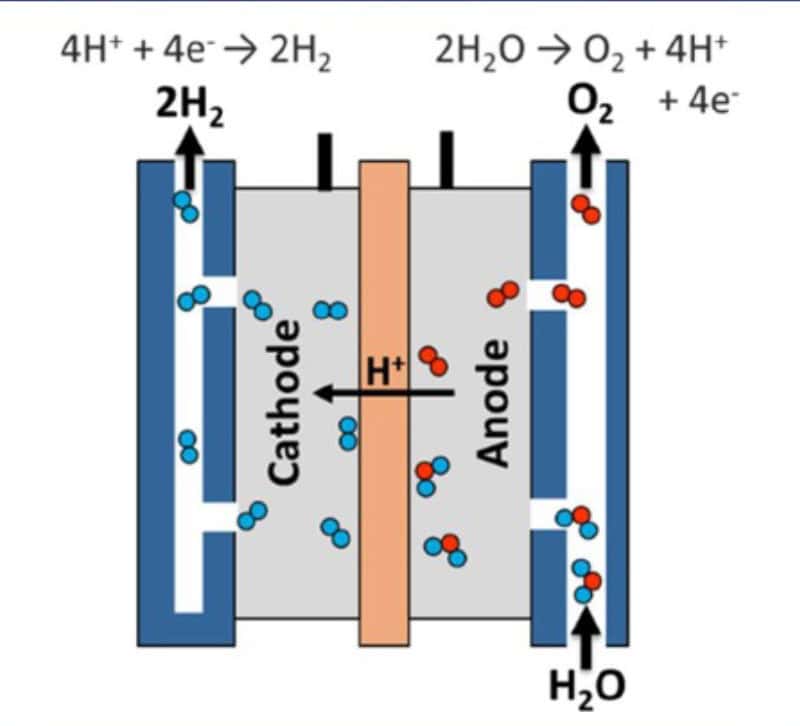
Readypower continues to explore the feasibility of an innovative carbon cleaning technology with Advanced Hydrogen Technologies Group. The technology aimed to improve engine efficiency and reduce emissions.


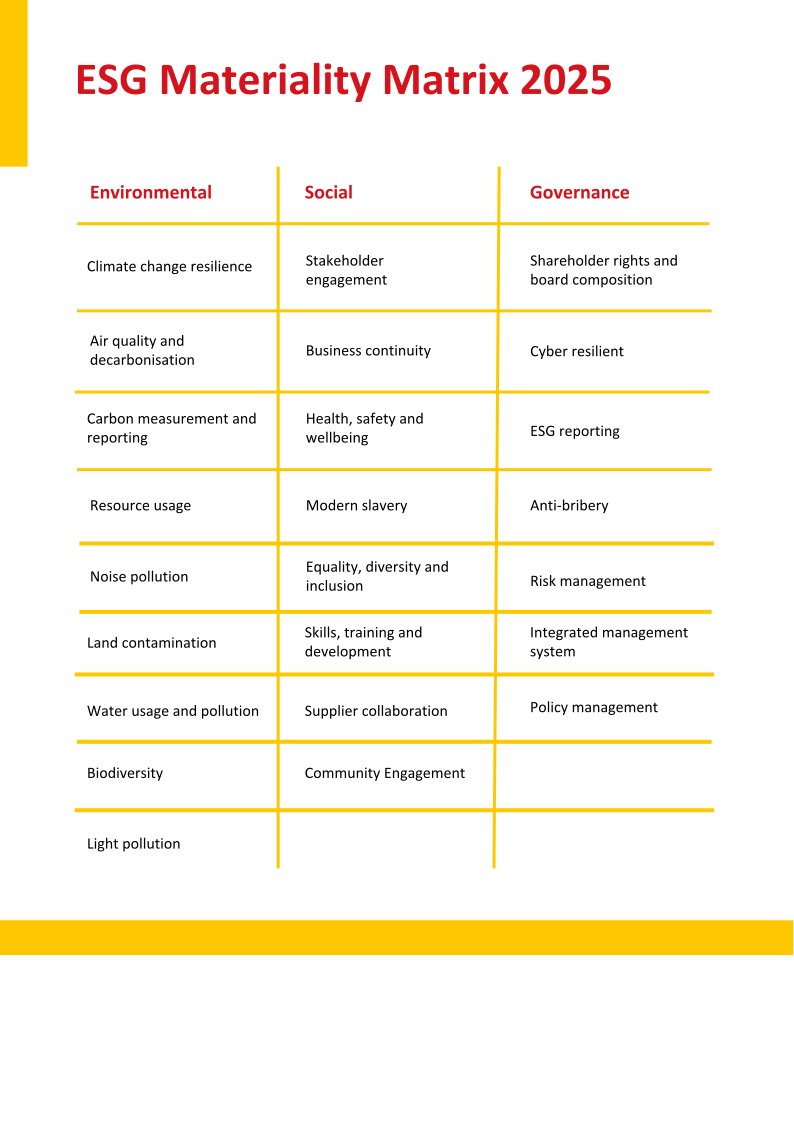
Environmental, Social and Governance Materiality
Materiality in ESG helps us determine which issues are most critical to our ability to create value over the short, medium, and long-term.
Key Points of ESG Materiality:
1.Financial Relevance:
- Impact on Financial Performance: assessing how ESG issues affect our financial health, profitability, and long-term sustainability.
- Risk Management: identifying and managing risks associated with ESG factors that could impact our operations and financial outcomes.
2.Stakeholder Considerations:
- Investor Concerns: evaluating which ESG factors are most relevant to investors and other stakeholders.
- Regulatory Requirements: compliance with laws, policies and contractual agreements related to environmental, social, and governance issues.
3.Industry Specificity:
- Sector-Specific Issues: we’ve identified that environmental factors are more material for us because we are an asset-led provider into the railway and construction industries, as opposed to social factors which are likely more significant for a retail company.
4.Value Creation:
- Sustainability and Growth: identifying ESG issues that contribute to the long-term sustainability and growth of the company.
- Competitive Advantage: leveraging ESG initiatives to gain a competitive edge in the market (Benchmarking via GRESB, ESOS Assessments, measuring our Scopes 1, 2 and 3, training with the Supply Chain Sustainability School).
We’ve organised our materiality assessments into focus areas to identify ESG issues that are most significant to us and where we can effect change.
Engaging with stakeholders, including: investors, employees, customers, and regulators, helps us understand their concerns and priorities.
Reporting frameworks and transparency remain vital. Sharing our performance data in our statutory accounts, to GRESB, SBTi, and in ESOS Assessments.
Sustainability Framework
Our approach to sustainability is also aligned to the 10 Rail Safety Standards Board (RSSB) Sustainable Development Principles.
– Customer Driven
We recognise and respond to our customers’ needs and expectations which ultimately has a positive impact for stakeholders utilising the Rail Network.
– Putting Rail in Reach of People
Readypower has undertaken significant modifications and upgrades to help make our assets accessible for our customers.
– Providing an End-to-End Journey
Readypower Group assets are equipped with the latest technology to safeguard users and to help achieve timely efficient works that minimises impact on the end user.
– Being an Employer of Choice
Readypower Group is committed to investment in its people to care for their personal development and wellbeing.
– Reducing our Environmental Impact
Readypower Group is investing in research, development and pilot projects to help with asset decarbonisation.
– Carbon Smart
Readypower measures and monitors its Scopes 1, 2 and 3 emissions to help make plans for carbon reduction. The business has also invested in electric and hybrid assets which makes up a large part of our fleet as we see this as a key part of industry decarbonisation.
– Having a Positive Social Impact
Readypower contributes to the community through sponsorship, charitable giving, donations and volunteering.
– Supporting the Economy
Readypower supports the economy through investment in new assets which helps to keep Britain moving.
– Optimising the Railway
Readypower supports the optimisation of the railway through investment in refurbishment and upgrades to its assets.
– Being Transparent
Readypower publicly reports on its progress as a sustainable business.
Equity, Diversity and Inclusion
Readypower are committed to being a progressive and fair employer, in an industry that has historically been male dominated. Central to our mission is the recognition that diversity and inclusion are essential for our success. We firmly believe that a diverse workforce brings a wealth of perspectives and experiences that drive innovation and excellence. Therefore, we are dedicated to increasing the representation of women at all levels across our organisation.
We currently employ several strategies to aid us in closing the gap, which include:
- Development of an engineering apprenticeship programme.
- Regular benchmarking exercises coinciding with regular pay reviews.
- Continued development of our recruitment strategy to encourage applicants from backgrounds outside of rail, where the roles don’t require specific competencies for rail and construction.
- Implementing and developing family-friendly HR policies.
- Our policies are reviewed annually by the Board with a view to improvement for both our existing staff groups and those we hope to attract, for example the introduction of a Menopause Policy.

Job advertisements are drafted using inclusive language, using the ACAS guidelines as a basis for wording. The organisation collects and monitors data on ethnic origin, disability and gender of our employees and workers. The data collected on gender enables us to monitor and report on the gender pay gap.
Management teams (up to executive level) regularly undertake IIRSM and Citation approved Equity, Diversity and Inclusion (EDI) training courses. Learning outcomes include understanding the Equality Act 2010 and protected characteristics, types of discrimination, treating others with respect and offering everyone fair access to opportunities within a professional environment.

During 2025 we joined Women in Rail. Readypower Group is committed to improving our diversity and joining WiR highlights that commitment to our customers, partners and suppliers.
WiR was created with a mission of improving diversity in the UK rail industry via highlighting barriers to entry, encouraging businesses to make diversity part of their business strategy, attracting more young people into the rail industry and providing networking and support opportunities.
Businesses with diverse teams outperform business with less diverse teams in terms of efficiency and profitability. This is because they foster a culture of innovation, creativity and solution-finding by employing people with different perspectives and approaches.
We’re here to help
For more information or to enquire about a service call 0118 9774 901, or call our 24 Hour on Call number 0800 0902407, or email us